




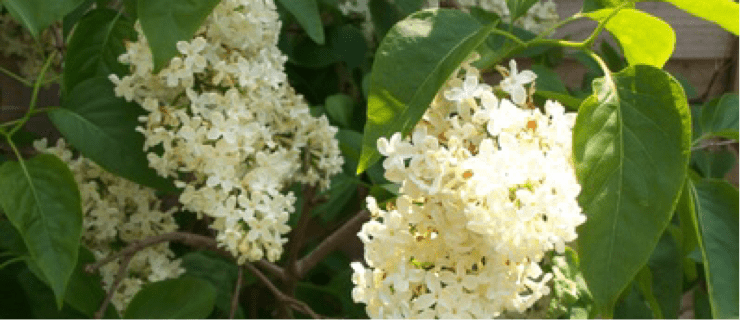
 When you think of the plant Lilac you probably imagine a plant with flowers which are coloured lilac. That variety is typical and can be heavily scented when in flower. However Lilac comes in other colours such as white, pink and even yellow.
Over time a Lilac plant may become woody and, if you are not careful take over your garden. Roots will rapidly spread under the top surface of your garden and you may find new growth springing up quite a way from its source. It is possible to plant into a large pot or restricted area and of course pruning each year will help. Left to its own devices a Lilac will soon become a fair sized shrub and ultimately a tree. If you want it to grow large, plant well away from buildings and walls. Lilac will flower in late Spring or early Summer. The large blooms will last for a few weeks before turning brown and dying back. Lush green leaves mean that your plant will stay green most of the year. It will shed its leaves in Autumn though and during winter be nothing more than bare branches. Early in Spring buds of new growth will appear and during April the flowers will begin to form. According to Wikipedia, "Syringa (Lilac) is a genus of about 20–25 species of flowering woody plants in the olive family (Oleaceae), native to woodland and scrub from southeastern Europe to eastern Asia, and widely and commonly cultivated in temperate areas elsewhere". Choosing the right location to plant a Lilac is not too difficult. They thrive in partial shade but will happily grow in full sun or shade. Perhaps the most important factor, in deciding where to plant, is those potentially damaging roots and the fact that your small shrub could all to soon be a large tree. Make sure you bear this in mind. Professional planting advice here
0 Comments
Leave a Reply. |
Archives
March 2017
Categories
All
|
 RSS Feed